



IGBT modules provide higher energy efficiency in challenging inverter applications
Manufacturers and consumers alike are striving to reduce reliance on fossil fuels, making electrification solutions increasingly popular. This is crucial for protecting the environment, limiting pollution, and curbing the destructive trend of global warming. Electric vehicles (EVs) are becoming more prevalent worldwide, with numerous companies entering the market to convert commercial and agricultural vehicles (CAVs) to electric power.
However, this transition is driving a rapid increase in electricity demand, placing significant strain on the power grid. Despite high efficiency, applications such as EVs, data centers, and heat pumps still require substantial energy to operate.
New renewable energy sources like solar, wind, and wave power are gaining widespread acceptance and are gradually becoming mainstream. Only applications powered entirely by renewable energy can be considered truly "clean."
The solar energy market has been developing for many years and is relatively mature. According to a report by Fortune Business Insights, the current solar market is estimated at $273 billion, with projections to grow to $436 billion by 2032. In 2023, the North American solar market accounted for over 40% of the global share.
Challenges in Power Conversion for Renewable Energy Applications
Solar power generation is growing rapidly. Data from the International Energy Agency (IEA) shows that in 2022, solar power generation increased by 26% year-over-year, reaching 1,300 TWh. This marks solar surpassing wind as the largest source of renewable electricity.
Solar photovoltaic (PV) panels generate direct current (DC), while the grid requires alternating current (AC). Therefore, central PV inverters are essential components in large grid-connected installations. All energy produced by the PV panels passes through the inverter, making inverter efficiency critically important. Although solar energy is abundant, low conversion efficiency can limit the amount of energy delivered to the grid. Energy lost during conversion is dissipated as heat, posing a significant challenge, especially since many solar installations are located in sunny, high-temperature environments like deserts.
Cost is also a vital consideration, directly impacting consumer electricity bills and utility company profitability. To achieve higher power levels, many central inverters use multiple conversion modules in parallel, with the number determined by each modules power rating. Higher power capacity per module reduces the number of modules needed, thereby lowering costs.
While EVs have made significant progress, CAVs have been slower to transition to electric power. CAVs are larger, consume more fuel per trip, and produce more emissions. Although they account for only 2% of total vehicles, they contribute 28% of greenhouse gas emissions from the transportation sector. While electrification is showing promise for commercial passenger vehicles like buses, most large trucks, construction machinery, and agricultural vehicles (e.g., tractors) still rely on diesel. This is now changing. To meet stringent zero-emission regulations in global markets such as the EU, China, and California (USA), the share of electric truck sales (battery electric and hybrid) is expected to increase from the current 5% to 40%-50% by 2030.
Compared to fossil fuel commercial vehicles, electric commercial vehicles have simpler structures with fewer moving parts. For the same load capacity, EVs are smaller, more reliable, and have lower maintenance costs. With the significant reduction in battery costs, the total cost of ownership for electric CAVs is now lower than that of internal combustion engine (ICE) vehicles.
Similar to solar applications, efficiency is a key requirement for electric CAVs. With a limited battery capacity per vehicle, higher efficiency in the inverters conversion process allows for a longer driving range or requires less energy to cover the same distance.
Given our future reliance on solar power and electric CAVs, reliability naturally becomes extremely important.
Advanced Power Technologies for Inverter Applications
In high-power applications like three-phase solar PV inverters, the three-level Active Neutral Point Clamped (ANPC) converter is a common topology. This multilevel topology is specifically designed to enhance system performance and efficiency.
Standard Neutral Point Clamped (NPC) converters use diodes to connect the neutral point of the DC link capacitor to the output. In an ANPC configuration (Figure 1), clamping is performed by switches, enabling better control, reducing switching losses, and improving efficiency. This correspondingly reduces thermal management requirements, contributing to smaller and lower-cost solutions.
The arrangement of the topology reduces voltage stress on individual switches, thereby improving reliability. Additionally, ANPC allows for more grid-friendly waveforms.
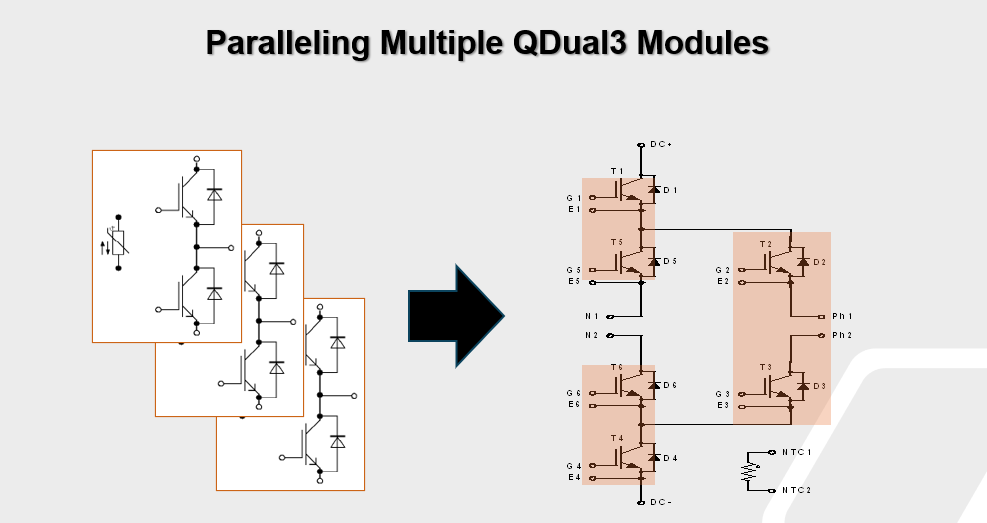
Figure 1: ANPC converters can be easily built using modules
Design engineers can create high-performance three-level Active Neutral Point Clamped modules by paralleling multiple power modules, such as onsemis QDual 3 IGBT modules, achieving system output power ranging from 1.6 MW to 1.8 MW.
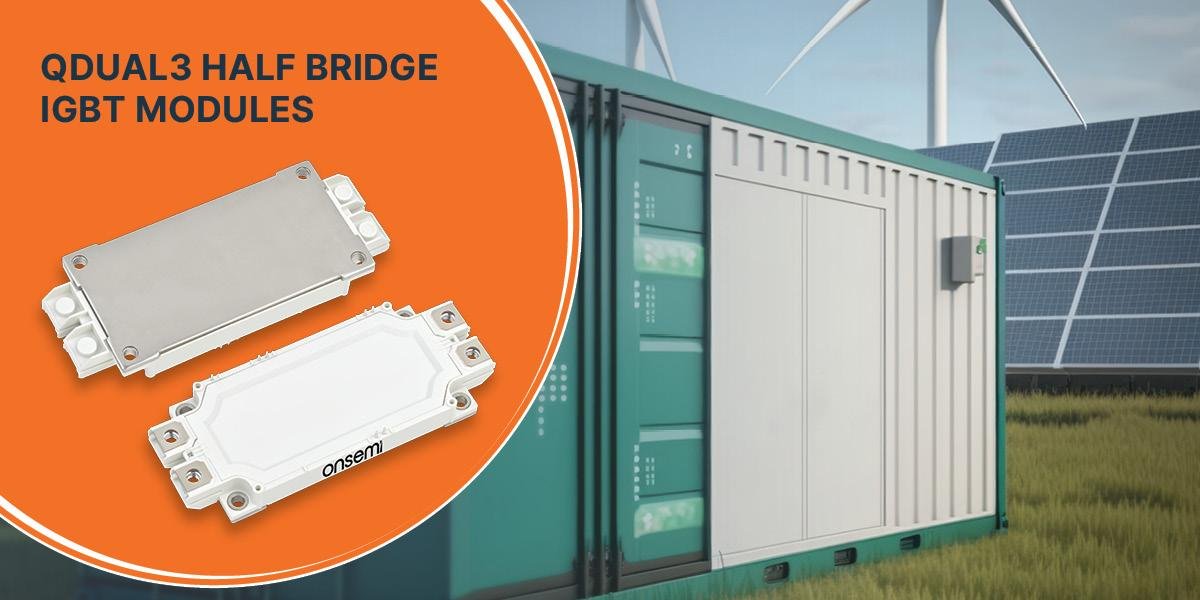
Figure 2: QDual3 IGBT module
The QDual 3 module integrates the next-generation 1200 V Field Stop 7 (FS7) IGBT and diode technology, providing superior performance for high-power applications. Compared to previous generations, FS7 technology significantly improves conduction losses.
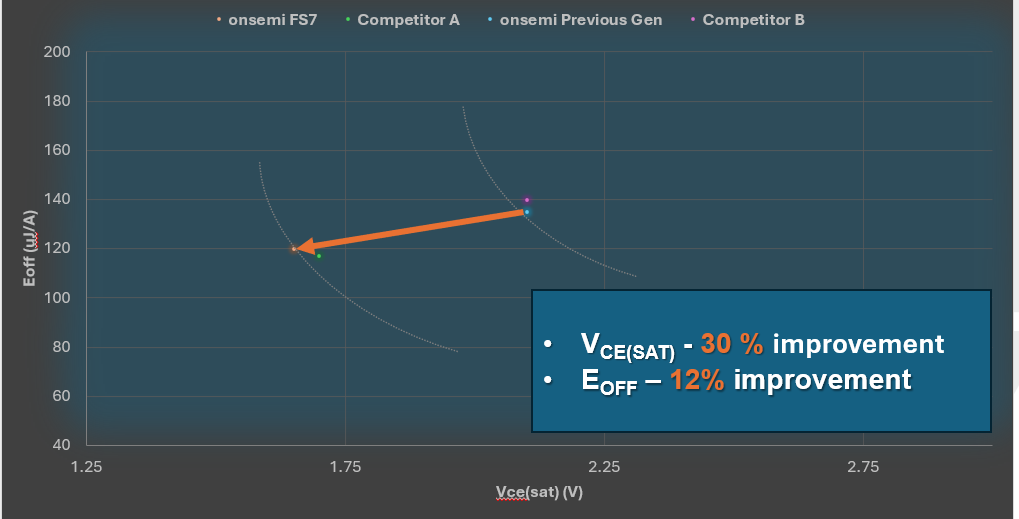
Figure 3: FS7 technology enhances key performance parameters
In the FS7 IGBT process, a narrow trench mesa provides low VCE(SAT) and high power density, while proton injection multiple buffers ensure ruggedness and soft switching characteristics (Figure 2). onsemis medium-speed FS7 devices have a VCE(SAT) as low as 1.65V, suitable for motion control applications; its FS7 fast products have an EOFF of only 57 µJ/A, ideal for high-power applications like solar inverters and CAVs.
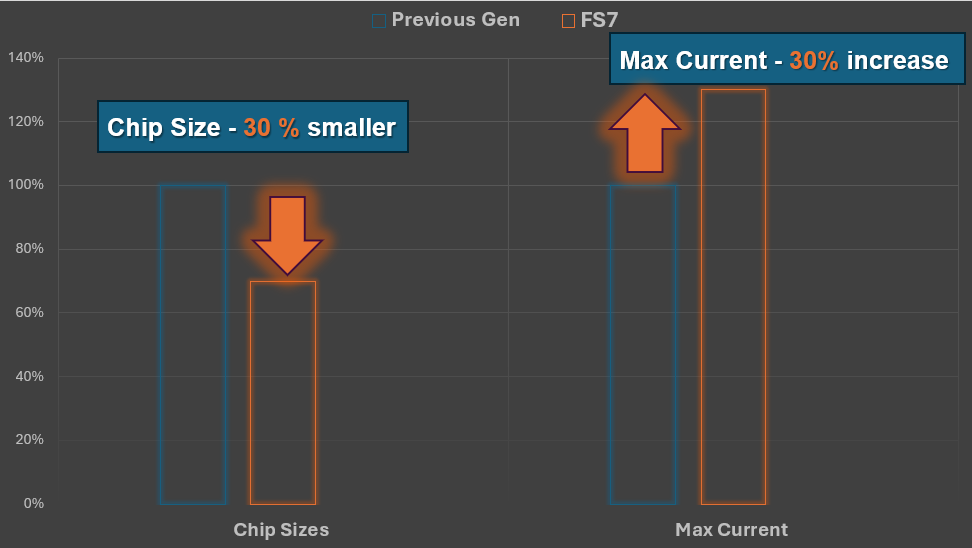
Figure 4: FS7 IGBT smaller die size, higher power density
The innovative FS7 technology enables a 30% reduction in die size in the new QDual3 modules compared to the previous generation (Figure 3). This miniaturization, combined with advanced packaging, significantly increases the maximum rated current. In motor control applications operating at temperatures up to 150 °C, the QDual3 delivers output power from 100 kW to 340 kW, approximately 12% higher than other products currently on the market.
Reliability is critical for solar and CAV applications, making the construction and testing methods of the modules essential. For example, while many similar solutions use wire bonding to fix terminals, onsemi chooses ultrasonic welding for its modules. This latter method enhances current carrying capability, provides a better thermal path, and is more robust than the former (Figure 4).
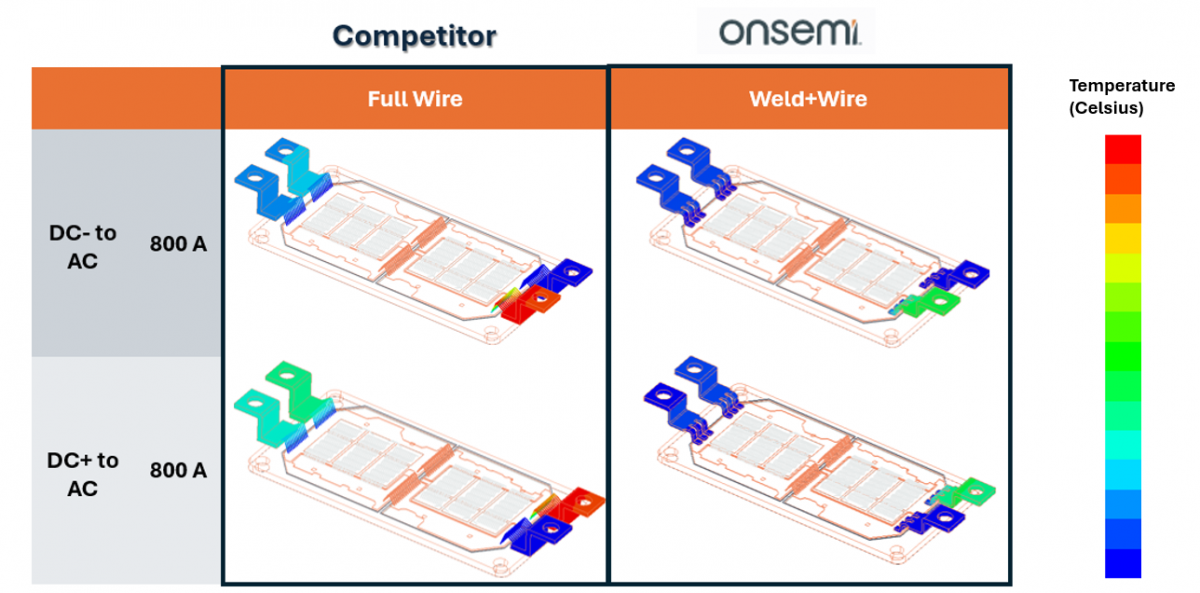
Figure 5: Ultrasonic welding reduces temperature and enhances reliability
This approach improves electrical conductivity, thereby reducing power losses and improving efficiency. It also lowers operating temperature, enhances mechanical rigidity, and improves the overall reliability of the module.
onsemis New High-Power QDual3 Technology
The dedicated QDual 3 half-bridge IGBT module NXH800H120L7QDSG is designed for central solar inverters, energy storage systems (ESS), and uninterruptible power supplies (UPS); the SNXH800H120L7QDSG is designed for CAVs. Both devices are based on FS7 technology, featuring improved VCE(SAT) and EOFF, leading to lower losses and higher efficiency.
Currently, designing a 1.725 MW inverter using an ANPC/INPC architecture with 600 A IGBT modules would require a total of 36 modules. However, using the new NXH800H120L7QDSG and SNXH800H120L7QDSG with a rated operating current of 800 A reduces the required number of modules by 9. Consequently, this saves 25% in design size, weight, and cost. This is extremely valuable for both solar and CAV applications, as weight reduction and improved efficiency can increase vehicle range.
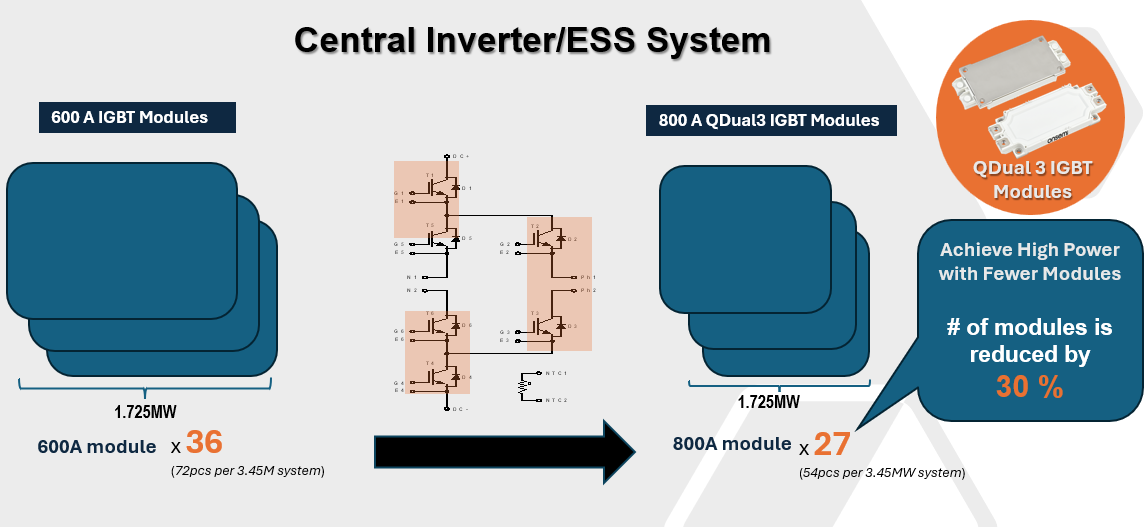
Figure 6: Higher current capability enables building systems with fewer modules
These modules include an isolated baseplate for thermal management and integrated NTC thermistors, supporting direct PCB mounting via solderable pins and using an industry-standard footprint to facilitate easy upgrades of existing designs to the new QDual3 technology.
All onsemi QDual3 modules undergo rigorous reliability testing, exceeding the reliability levels of other similar devices on the market. Our humidity test requires products to withstand 960V bias for up to 2000 hours, whereas comparable devices only require 80V bias for 1000 hours. Vibration testing is critical for CAV applications; our products are tested for up to 22 hours at 30 G peak / 10G RMS to meet AQG324 requirements. Other devices are tested at vibration levels as low as 5 G for durations as short as 1 hour.
Conclusion
As the world increasingly adopts renewable energy, the power grid is under immense pressure. Solar power generation has matured, surpassing wind in 2022 to become the primary source of renewable electricity.
Although fossil fuel-powered vehicles remain a major source of pollution, the electrification of CAVs is steadily progressing and is already showing promising results.
New semiconductor technologies like onsemis FS7 enable the development of low-loss, high-power devices to meet the efficiency and reliability demands of these fields. Based on this technology, onsemis new QDual3 devices feature a compact package for high power density and excellent efficiency. Well-welded terminals and certification tests surpassing those of other devices on the market help ensure the robust performance of QDual3 devices.
The next-generation NXH800H120L7QDSG and SNXH800H120L7QDSG modules offer a current capability of up to 800 A. This allows inverter designs to reduce the number of required modules by 25%, further simplifying design, reducing volume, weight, and cost.
This is undoubtedly a significant advancement. onsemi will continue to deeply explore the high-performance potential of FS7 technology, aiming to launch more modules that surpass existing standards to meet the growing needs of the solar industry and CAV manufacturers.