



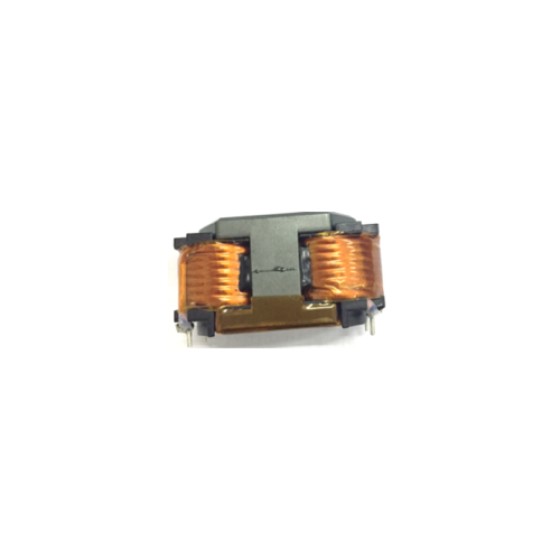
What Is the Difference Between Soft and Hard Ferrite?
Ferrite materials are widely used in electronic and electrical applications because of their excellent magnetic properties and high electrical resistance. However, ferrite is not a single type of material. Based on their magnetic behavior, ferrites are generally divided into two main categories: soft ferrite and hard ferrite.
Although both materials are made from ceramic magnetic compounds, their characteristics and applications are very different. Soft ferrite is mainly used in transformers, inductors, and high-frequency magnetic components, while hard ferrite is commonly used for permanent magnets.
What Is Soft Ferrite?
Soft ferrite is a magnetic material that can be easily magnetized and demagnetized when an external magnetic field is applied or removed.
The key characteristic of soft ferrite is its low coercivity, meaning it requires relatively little energy to change its magnetic state. This makes it highly suitable for applications where the magnetic field changes continuously.
In electronic circuits, transformers and inductors must repeatedly store and release magnetic energy at high speeds. Soft ferrite allows this process to happen efficiently while keeping energy losses low.
Common soft ferrite materials include:
- Manganese-zinc ferrite (MnZn)
- Nickel-zinc ferrite (NiZn)
Each type is optimized for different frequency ranges and operating conditions.
What Is Hard Ferrite?
Hard ferrite, also known as permanent magnet ferrite, has very different magnetic characteristics.
Unlike soft ferrite, hard ferrite has high coercivity and strong magnetic retention. Once magnetized, it can maintain its magnetic field for a long time without needing continuous external energy.
Because of this property, hard ferrite is commonly used to manufacture permanent magnets.
Typical applications include:
- Loudspeakers
- Motors
- Magnetic sensors
- Magnetic holders
- Small generators
Hard ferrite is designed to maintain magnetism rather than repeatedly switch magnetic states.
Key Differences Between Soft and Hard Ferrite
The main differences between soft and hard ferrite are related to how they respond to magnetic fields.
| Feature | Soft Ferrite | Hard Ferrite |
|---|---|---|
| Magnetic behavior | Easily magnetized and demagnetized | Maintains permanent magnetism |
| Coercivity | Low | High |
| Energy loss | Low during high-frequency operation | Not suitable for rapid switching |
| Main use | Transformers, inductors, EMI components | Permanent magnets |
| Magnetic retention | Temporary | Long-term |
| Typical applications | Power electronics and signal circuits | Motors, speakers, sensors |
Why Soft Ferrite Is Used in Transformers
Transformers used in modern electronics operate by continuously changing magnetic fields. Every switching cycle requires the core material to magnetize and demagnetize repeatedly.
If a material retained magnetism strongly, it would create large energy losses and reduce efficiency.
Soft ferrite provides several advantages for transformer applications:
- Low core loss at high frequencies
- High electrical resistance
- Reduced eddy current loss
- Good magnetic performance
- Suitable for compact designs
This is why most high-frequency transformers used in switching power supplies rely on soft ferrite cores.
Why Hard Ferrite Is Not Used for Transformers
Hard ferrite is designed to keep its magnetic state, which is exactly the opposite of what a transformer core requires.
A transformer core must respond quickly to changing magnetic fields. If the core cannot easily change its magnetization, energy losses increase and the transformer becomes inefficient.
Therefore, hard ferrite is generally unsuitable for transformer and inductor applications.
How Material Selection Affects Performance
Choosing the correct ferrite type has a direct impact on the performance of magnetic components.
For example, a transformer designed for a high-frequency power supply requires a soft ferrite material with low core loss at the operating frequency. A permanent magnet application requires a hard ferrite material with strong magnetic stability.
Using the wrong ferrite material can result in:
- Excessive heat generation
- Reduced efficiency
- Poor magnetic performance
- Shorter component life
Applications of Soft Ferrite
Soft ferrite is found in many modern electronic systems, including:
- Switching power supplies
- High-frequency transformers
- Inductors
- Common mode chokes
- EMI filters
- Wireless charging systems
- DC-DC converters
As electronic devices become smaller and more efficient, soft ferrite materials continue to play an important role in power conversion technology.
Applications of Hard Ferrite
Hard ferrite is commonly used where a permanent magnetic field is needed, such as:
- Speaker magnets
- Electric motors
- Magnetic separators
- Magnetic sensors
- Small actuators
Its low cost and good magnetic stability make it one of the most widely used permanent magnet materials.
Final Thoughts
Soft ferrite and hard ferrite are both important magnetic materials, but they serve completely different purposes. Soft ferrite is designed for applications where magnetic fields change rapidly, making it ideal for transformers and power electronics. Hard ferrite is designed to maintain a permanent magnetic field, making it suitable for magnets and motor applications.
Understanding the difference between these two materials helps engineers select the right ferrite for each application and achieve better performance, efficiency, and reliability in magnetic components.