



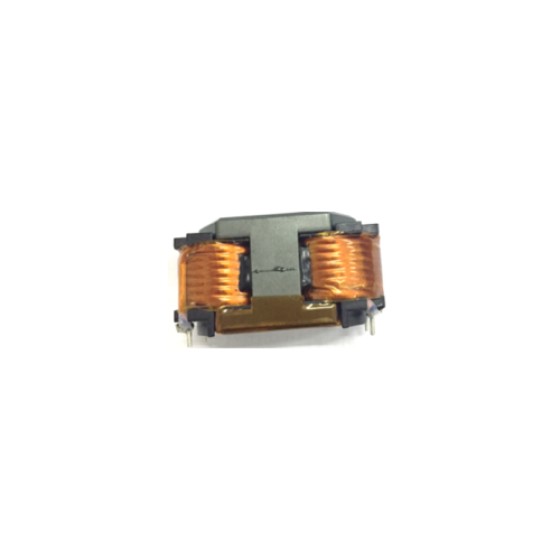
Inductor vs Transformer: What Is the Difference?
Inductors and transformers are two important magnetic components widely used in electronic and power systems. Because both components are based on electromagnetic principles and often contain coils and magnetic cores, they are sometimes confused with each other.
However, inductors and transformers have different structures, functions, and applications. An inductor is mainly designed for storing energy and controlling current, while a transformer is designed for transferring electrical energy between circuits and changing voltage levels.
Understanding the differences between inductors and transformers helps engineers select the right magnetic component for specific applications.
Basic Structure Differences
The main difference between an inductor and a transformer is the number of windings and their purpose.
An inductor usually consists of a single coil wound around a magnetic core. When current flows through the coil, energy is stored in the magnetic field generated by the winding.
A transformer typically contains two or more separate windings:
- Primary winding
- Secondary winding
Energy is transferred from the primary winding to the secondary winding through magnetic coupling, allowing voltage conversion and electrical isolation.
How Does an Inductor Work?
An inductor works by resisting changes in current flow.
When electrical current passes through the winding, a magnetic field is created around the coil. If the current changes, the changing magnetic field generates an induced voltage that opposes the current variation.
This characteristic allows inductors to:
- Store electrical energy
- Smooth current fluctuations
- Filter electrical noise
- Control current in circuits
Inductors are especially important in switching power supplies, where they store and release energy during the switching process.
How Does a Transformer Work?
A transformer transfers electrical energy between two or more circuits through electromagnetic induction.
When an alternating current flows through the primary winding, it creates a changing magnetic field inside the core. This magnetic field induces a voltage in the secondary winding.
The voltage relationship between the windings depends on the turns ratio.
Transformers are commonly used for:
- Voltage step-up or step-down
- Electrical isolation
- Power conversion
- Signal transmission
Key Differences Between Inductors and Transformers
| Feature | Inductor | Transformer |
|---|---|---|
| Main Function | Energy storage and current control | Energy transfer and voltage conversion |
| Number of Windings | Usually one winding | Two or more windings |
| Energy Transfer | Stores energy temporarily | Transfers energy between circuits |
| Electrical Isolation | Usually no isolation | Provides isolation between circuits |
| Main Applications | Filters, converters, power regulation | Power supplies, voltage conversion |
Different Magnetic Core Requirements
Although both components may use ferrite cores, their core requirements are different.
Inductors often require cores with suitable energy storage capability. Some inductors use air gaps in the magnetic path to prevent saturation and allow higher current operation.
Transformers focus more on efficient magnetic coupling between windings. The core design aims to reduce losses and improve energy transfer efficiency.
Common transformer core materials include:
- MnZn ferrite
- NiZn ferrite
- Silicon steel
- Amorphous materials
For high frequency transformers, ferrite cores are widely used because they provide low losses at high operating frequencies.
Applications of Inductors
Inductors are found in many electronic systems, including:
- DC-DC converters
- Switching power supplies
- EMI filters
- Common mode chokes
- Battery management systems
- Automotive electronics
Power inductors are especially important in applications requiring stable current control and efficient energy conversion.
Applications of Transformers
Transformers are widely used in:
- AC/DC adapters
- High frequency power supplies
- Electric vehicle chargers
- Solar inverters
- Industrial power systems
- Communication equipment
High frequency transformers using ferrite cores allow modern electronic devices to achieve smaller size and higher efficiency.
Inductor and Transformer in Switching Power Supplies
In switching power supplies, both inductors and transformers often work together.
The transformer is responsible for:
- Voltage conversion
- Electrical isolation
- Energy transfer between input and output
The inductor is responsible for:
- Current smoothing
- Energy storage
- Output regulation
For example, in a flyback converter, the transformer itself also functions as an energy storage element. In other converter designs, separate inductors are used after the transformer stage to stabilize output current.
How to Choose Between an Inductor and Transformer?
The choice depends on the function required in the circuit.
Choose an inductor when the application requires:
- Current filtering
- Energy storage
- Noise suppression
- Power regulation
Choose a transformer when the application requires:
- Voltage conversion
- Electrical isolation
- Power transfer between circuits
In many power electronics systems, both components are necessary to achieve efficient and reliable operation.
Inductors and transformers may share similar magnetic principles, but their roles in electronic circuits are fundamentally different. Understanding these differences allows engineers to design better power systems and select the appropriate magnetic components for each application.