




High Frequency Transformer Working Principle
High frequency transformers are widely used in modern power electronics because they provide efficient voltage conversion while keeping equipment compact and lightweight. Unlike conventional power transformers that operate at the utility frequency of 50 or 60 Hz, high frequency transformers typically work from several kilohertz (kHz) to several hundred kilohertz, and in some specialized applications, even into the megahertz (MHz) range. Their ability to transfer energy efficiently at high switching frequencies makes them an essential component in switching power supplies, renewable energy systems, industrial automation, telecommunications, medical equipment, and electric vehicles.
What Is a High Frequency Transformer?
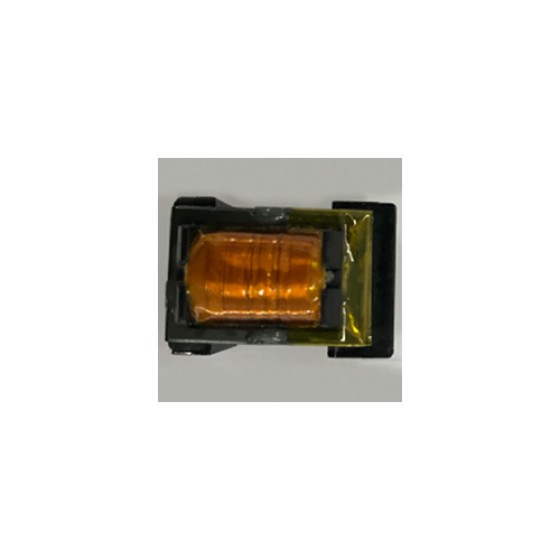
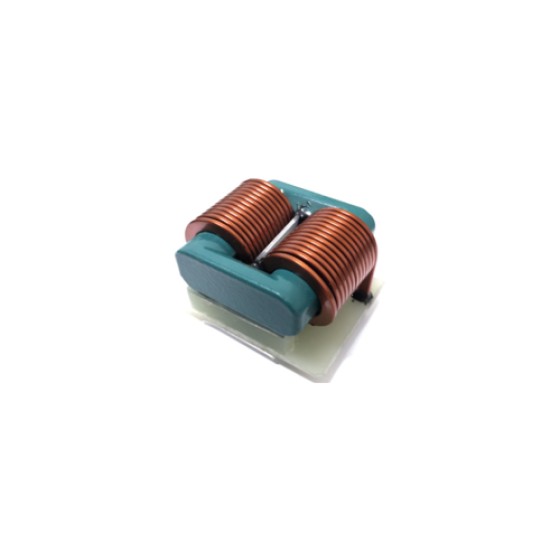
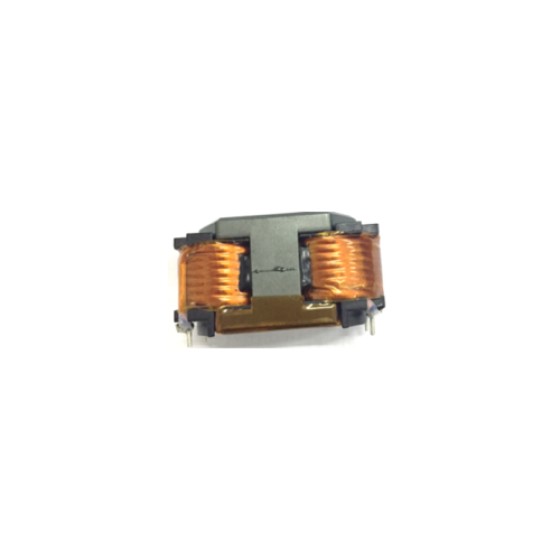
A high frequency transformer is an electromagnetic device designed to transfer electrical energy between two or more circuits through magnetic induction. Instead of being connected directly to the AC power grid, it usually operates inside a switching power supply, where semiconductor devices rapidly switch the input voltage on and off at high frequencies.
This high-frequency operation allows the transformer to deliver the same power as a traditional transformer while using a much smaller magnetic core and fewer turns of copper wire. The result is a significant reduction in size, weight, and energy loss.
Basic Working Principle
The operation of a high frequency transformer is based on electromagnetic induction, a principle discovered by Michael Faraday. When alternating current flows through the primary winding, it produces a changing magnetic field inside the magnetic core. This magnetic flux links the secondary winding, inducing a corresponding voltage.
Unlike conventional transformers, the alternating magnetic field in a high frequency transformer is generated electronically. A switching circuit converts DC power into high-frequency pulses, which are then applied to the primary winding. The transformer transfers this energy to the secondary side, where it is rectified and filtered to produce the required DC output.
This process allows efficient energy transfer while maintaining electrical isolation between the input and output circuits.
Main Components
Although transformer designs vary depending on the application, most high frequency transformers consist of the following parts:
- Magnetic Core – Usually made from ferrite material because of its low core loss at high frequencies.
- Primary Winding – Receives the high-frequency input signal from the switching circuit.
- Secondary Winding – Delivers the transformed voltage to the output stage.
- Insulation System – Provides electrical isolation and ensures safe operation.
- Bobbin or Coil Former – Supports the windings and maintains proper spacing.
The performance of the transformer depends on the proper selection of core material, winding arrangement, insulation, and manufacturing accuracy.
Why High Frequency Matters
Increasing the operating frequency changes the way magnetic energy is stored and transferred. According to transformer design principles, a higher frequency allows the required magnetic flux to be achieved with a much smaller core.
This is why modern switching power supplies can be far smaller than traditional linear power supplies while maintaining similar power ratings.
Operating at higher frequencies also offers several additional advantages:
- Smaller transformer size
- Reduced weight
- Faster energy transfer
- Improved overall efficiency
- Higher power density
- Better suitability for compact electronic devices
However, higher frequencies also introduce new design challenges, including increased electromagnetic interference (EMI), skin effect, proximity effect, and greater switching losses. Engineers must carefully balance efficiency, thermal performance, and manufacturing cost during the design process.
Role of the Ferrite Core
Ferrite is the preferred magnetic material for most high frequency transformers because it performs exceptionally well at elevated switching frequencies. Compared with laminated silicon steel used in low-frequency transformers, ferrite has much higher electrical resistance, which greatly reduces eddy current losses.
Different ferrite materials are optimized for different operating frequency ranges and power levels. Selecting the appropriate core material is essential for achieving high efficiency and reliable long-term performance.
Voltage Transformation
Like all transformers, a high frequency transformer changes voltage according to the turns ratio between the primary and secondary windings.
If the secondary winding contains more turns than the primary winding, the output voltage increases. Conversely, if the secondary winding has fewer turns, the output voltage decreases.
Besides voltage conversion, the transformer also provides galvanic isolation, improving electrical safety and protecting sensitive electronic circuits from faults on the input side.
Common Applications
High frequency transformers are found in a wide range of electronic products and industrial equipment, including:
- Switching power supplies (SMPS)
- AC-DC and DC-DC converters
- Electric vehicle onboard chargers
- Solar inverters
- Battery energy storage systems
- Industrial automation equipment
- LED power supplies
- Medical electronics
- Telecommunications equipment
- AI servers and data center power systems
As power electronics continue to evolve toward higher efficiency and greater power density, the demand for advanced high frequency transformer technology continues to grow.
Design Considerations
Designing a reliable high frequency transformer involves much more than selecting a suitable turns ratio. Engineers must evaluate several interacting factors, including:
- Operating frequency
- Input and output voltage
- Power rating
- Core material selection
- Winding structure
- Leakage inductance
- Thermal management
- Insulation requirements
- Electromagnetic compatibility (EMC)
- Manufacturing consistency
Even small changes in winding layout or insulation thickness can affect efficiency, temperature rise, and electromagnetic performance.
Conclusion
The working principle of a high frequency transformer is fundamentally the same as that of any transformer—it transfers energy through electromagnetic induction. The key difference lies in its operating frequency. By using high-frequency switching and ferrite magnetic cores, these transformers achieve higher efficiency, smaller dimensions, and lower weight than traditional low-frequency designs.
Today, high frequency transformers are indispensable in modern electronic systems, supporting everything from consumer electronics and industrial automation to renewable energy installations and electric vehicles. As demand grows for more compact and energy-efficient power conversion solutions, high frequency transformer technology will remain at the heart of next-generation power electronics.