




What Are the Different Types of Insulation Materials Used in Transformers?
Insulation materials are essential components in transformer design because they prevent electrical breakdown, improve safety, and ensure reliable operation over long periods. Although transformers mainly rely on magnetic cores and windings to transfer energy, insulation systems determine how well the transformer can handle voltage, temperature, and environmental stress.
Different transformer applications require different insulation materials. A small high frequency transformer used in a switching power supply may require different insulation characteristics compared with a large power transformer used in electrical distribution systems.
Choosing the right insulation material is an important part of transformer design because it directly affects performance, lifetime, and safety.
Why Are Insulation Materials Important in Transformers?
A transformer contains multiple conductive parts, including primary windings, secondary windings, and magnetic components. These parts operate at different electrical potentials, meaning they must be properly isolated from each other.
The main functions of transformer insulation include:
- Preventing electrical short circuits
- Improving voltage isolation
- Reducing leakage current
- Protecting winding structures
- Increasing transformer service life
Without effective insulation, high voltage stress can cause breakdown between windings, resulting in transformer failure.
What Types of Insulation Materials Are Used in Transformers?
Transformers use several types of insulation materials depending on their structure, voltage level, operating temperature, and application requirements.
Common insulation materials include:
- Insulation tape
- Electrical insulation films
- Enamel coatings
- Epoxy materials
- Insulation paper
- Bobbin materials
- Heat-resistant sleeves
Each material has different electrical, thermal, and mechanical characteristics.
Insulation Tape
Insulation tape is one of the most widely used materials in transformer manufacturing.
It is commonly applied between winding layers or between primary and secondary windings to provide electrical isolation.
Common types include:
- Polyester tape
- Polyimide tape
- Polypropylene tape
Polyimide insulation tape is often used in high temperature applications because it maintains good insulation performance under demanding conditions.
Insulation tape helps:
- Increase dielectric strength
- Separate winding layers
- Protect wire surfaces
- Improve manufacturing reliability
Electrical Insulation Films
Insulation films are thin materials used where strong electrical isolation and space efficiency are required.
Common materials include:
- Polyester film
- Polyimide film
- Polyethylene film
These films provide:
- High dielectric strength
- Low thickness
- Good mechanical stability
In high frequency transformers, insulation films are often used to maintain proper isolation while keeping transformer size compact.
Enamel Coating on Magnet Wire
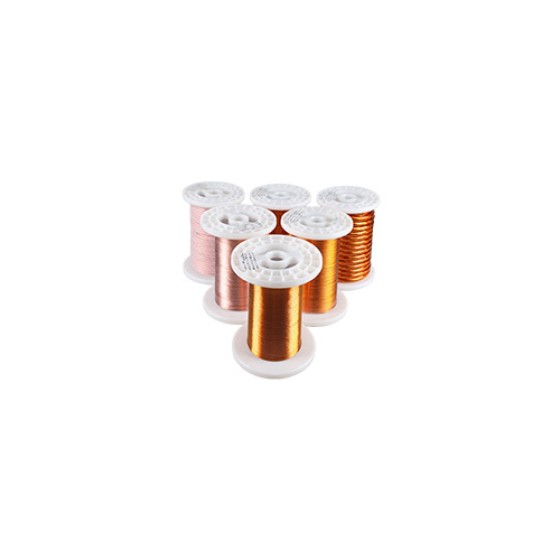
Magnet wire used in transformer windings is usually covered with a thin enamel insulation layer.
This coating allows multiple turns of wire to be wound closely together while preventing electrical contact between individual turns.
The enamel layer provides:
- Electrical insulation
- Heat resistance
- Mechanical protection
Different grades of enamel wire are selected according to operating temperature and application requirements.
Insulation Paper
Insulation paper has been used in transformers for many years, especially in traditional power transformers.
It is commonly used to separate windings and provide additional insulation layers.
Advantages include:
- Good electrical insulation
- Cost effectiveness
- Good compatibility with transformer structures
For oil-filled transformers, insulation paper works together with transformer oil to create a complete insulation system.
Epoxy Insulation Materials
Epoxy materials are widely used for encapsulation and protection of electronic transformers.
Epoxy resin can provide:
- Moisture protection
- Mechanical strength
- Environmental resistance
It is commonly found in:
- Encapsulated transformers
- Power modules
- Industrial electronic equipment
By covering sensitive components, epoxy materials help improve durability in harsh environments.
Transformer Bobbin Materials
The transformer bobbin, also called a coil former, provides mechanical support for windings and contributes to electrical insulation.
Common bobbin materials include:
- Phenolic materials
- Nylon
- Polyester-based plastics
- High temperature engineering plastics
A suitable bobbin material should provide:
- Good insulation properties
- High temperature resistance
- Mechanical strength
In high frequency transformers, bobbin design is especially important because it affects winding arrangement and insulation distance.
Triple Insulated Wire
Triple insulated wire is widely used in high frequency transformers, especially in switching power supplies.
Unlike traditional magnet wire, triple insulated wire has multiple insulation layers around the conductor.
Its advantages include:
- Improved electrical isolation
- Reduced insulation requirements between windings
- Support for compact transformer designs
This type of wire is commonly used in applications requiring reinforced insulation, such as:
- Chargers
- Adapters
- Industrial power supplies
How Do Engineers Select Transformer Insulation Materials?
The selection of insulation materials depends on several factors.
Voltage Requirements
Higher voltage applications require insulation materials with stronger dielectric performance.
Operating Temperature
Transformer insulation must withstand heat generated during operation.
Materials are selected according to temperature classes to ensure long-term reliability.
Operating Frequency
High frequency transformers require insulation materials suitable for switching environments.
Material thickness and electrical characteristics must be carefully considered.
Safety Standards
Many transformer applications must comply with international safety requirements.
Insulation systems are designed according to factors such as:
- Isolation distance
- Dielectric strength
- Safety regulations
How Does Insulation Affect Transformer Reliability?
Insulation aging is one of the major causes of transformer failure.
Over time, insulation materials may deteriorate due to:
- Excessive heat
- Electrical stress
- Moisture
- Mechanical vibration
When insulation performance decreases, the risk of:
- Short circuits
- Leakage current
- Winding damage
increases.
A well-designed insulation system helps transformers operate safely for longer periods.
Insulation Materials in Modern Transformer Applications
Modern electronic devices require transformers that are smaller, lighter, and more efficient. This has increased demand for advanced insulation materials with higher temperature resistance and better electrical performance.
High frequency transformers used in:
- Renewable energy systems
- Electric vehicle chargers
- Data center power supplies
- Industrial power electronics
often require specialized insulation solutions.
The development of better insulation materials allows transformer manufacturers to create more compact designs while maintaining safety and reliability.
Insulation materials play a critical role in transformer performance by providing electrical isolation, thermal protection, and mechanical stability. From insulation tape and films to triple insulated wire and advanced polymer materials, each material is selected according to the transformer’s operating requirements. A properly designed insulation system is essential for improving transformer reliability and extending service life.